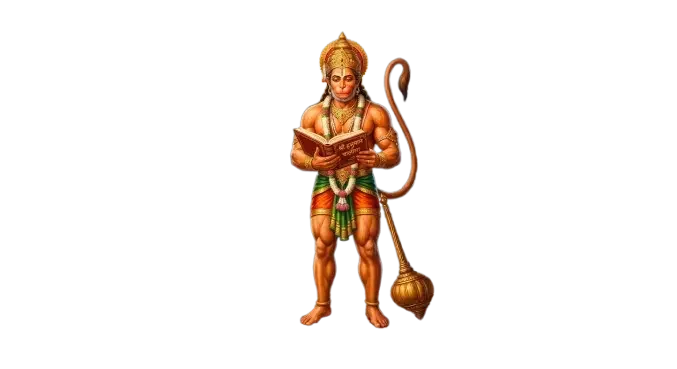
Hanuman Chalisa PDF
Hanuman Chalisa is usually belongs to Hinduism and is mainly recited by devotees of Lord Hanuman and Lord Rama. Download Hanuman Chalisa PDF Download or want to read online now in clear text and also get information about hanuman chalisa. I have shared my complete knowledge in it.
There is something extraordinary about a prayer that has survived 500 years, been recited by illiterate farmers and Harvard scholars alike, memorized by children before they learn algebra, and whispered by people in hospitals, prisons, battlefields, and boardrooms. That prayer is the Hanuman Chalisa.
You might have heard it playing from a rickshaw in Delhi, from a temple speaker in rural Bihar, from your grandmother’s lips at 5 in the morning, or from a Bollywood film’s devotional sequence. But the Hanuman Chalisa pdf is far more than a cultural fixture. It is, for hundreds of millions of people, a lifeline — a 40-verse compact encyclopedia of spiritual wisdom, a psychological anchor, and a living document of devotion that continues to resonate across centuries.
This article is written for everyone — the curious non-believer who wants to understand what the fuss is about, the faithful devotee who wants to go deeper, the spiritual seeker who feels something when the words are recited but doesn’t know why, and the scholar who wants the complete picture.
We are going to go deep. Really deep. We will cover the history, the author, every single chaupai explained verse by verse, the science, the mythology, the astrology, the common questions, the miracles people attribute to it, and much more. By the time you finish reading, you will understand the Hanuman Chalisa pdf in a way that most people never do — not just as something to recite, but as something to truly understand, feel, and live.
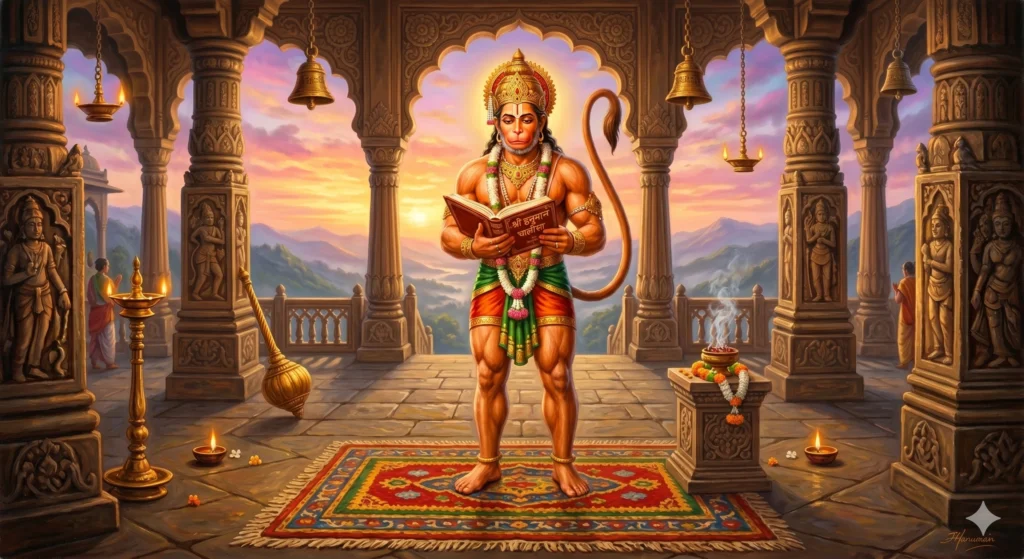
What Is the Hanuman Chalisa?
The Basic Definition
The word “Hanuman Chalisa” breaks down simply: Hanuman refers to Lord Hanuman, the great devotee of Lord Rama and one of the most beloved deities in Hinduism. Chalisa comes from the Hindi/Sanskrit word “chalis” (चालीस), which means forty. So the Hanuman Chalisa is, literally, a forty-verse hymn in praise of Lord Hanuman.
It was composed in the Awadhi language — a dialect of Hindi spoken in the Awadh region of Uttar Pradesh — by the poet-saint Goswami Tulsidas, believed to have been written somewhere between the 16th and 17th century CE.
The Hanuman Chalisa pdf consists of:
- Two Dohas (couplets) at the beginning, called the “Mangalacharan” and a closing doha
- Forty Chaupais (quatrains — four-line verses) in between
- One final Doha at the end
Total count: 2 Dohas + 40 Chaupais + 1 Doha = 43 verses in total.
The Language
The Hanuman Chalisa is written in Awadhi, not classical Sanskrit. This is significant. Tulsidas made a deliberate choice to write in the language of the common people, just as he wrote the Ramcharitmanas in Awadhi. This democratized devotion — it meant that people who didn’t know Sanskrit, who hadn’t studied at gurukuls, who worked in fields and markets, could still access the wisdom directly.
Awadhi is derived from Sanskrit but much closer to modern Hindi. It is melodic, rhythmic, and easy to memorize — qualities that made the Hanuman Chalisa spreadable across generations without any formal education system.
The Scale of Its Reach
Before we dive in, consider this: the Hanuman Chalisa pdf is believed to be one of the most recited religious texts in the world. Some estimates suggest that on any given Tuesday or Saturday (days associated with Hanuman worship), tens of millions of people in India alone recite it. It has been translated into virtually every Indian language and dozens of foreign languages. It has been sung, rapped, set to classical ragas, and even used in therapy.
There is no other text of its length — just over 500 words in Awadhi — that has influenced so many people for so long.
The Author: Goswami Tulsidas — The Man Behind the Miracle
Who Was Tulsidas?
Goswami Tulsidas (c. 1511–1623 CE) — sometimes dated 1532–1623 — was one of the greatest poet-saints India has ever produced. He was a Vaishnava Hindu saint, poet, and philosopher who is best known for composing the Ramcharitmanas, an Awadhi retelling of the Ramayana that is considered one of the greatest works of world literature. But it was the Hanuman Chalisa that became his most universally adopted composition.
Tulsidas was born in Rajapur (present-day Uttar Pradesh), though some accounts say Soron near Etah. His birth name is said to have been Ram Bola. His early life was marked by tragedy and hardship — according to tradition, he was born after an unusually long gestation period, came into the world with all 32 teeth already present, and was abandoned by his parents at birth due to astrological predictions that he would bring misfortune to his family.
He was raised by a maidservant and later taken under the care of the saint Narharidas, who introduced him to the stories of Rama. He later studied Sanskrit scripture and Vedic philosophy at Varanasi.
His Spiritual Journey
Tulsidas was deeply married to a woman named Ratnavali. The story goes that his wife once rebuked him for his excessive attachment to her, saying words to the effect: “If only you had half this love for Rama, you would have crossed this ocean of existence.” This rebuke — though the exact historical accuracy is debated — became the turning point of his life. He renounced worldly attachment and devoted himself entirely to Lord Rama.
His devotional life was rooted not just in Rama but also in Hanuman. Tulsidas believed deeply that to reach Rama, one must go through Hanuman. This theological understanding — that Hanuman is the gateway, the mediator, the supreme devotee through whom we approach the Divine — is embedded in every verse of the Hanuman Chalisa.
When Was the Hanuman Chalisa Written?
Most scholars place the composition of the Hanuman Chalisa around 1574 CE, though some traditional accounts connect its writing to a period when Tulsidas was imprisoned by the Mughal Emperor Akbar. According to popular lore (though not confirmed historically), when Tulsidas refused to perform a miracle at Akbar’s court, he was imprisoned. In his confinement, he composed the Hanuman Chalisa pdf, and such was the power of his devotion that Hanuman appeared in the form of an army of monkeys that terrorized the Mughal court, leading to Tulsidas’s release.
Whether this story is historical or legendary, it captures something essential about the Hanuman Chalisa’s perceived power: that it does not merely describe Hanuman but actually invokes him.
Tulsidas’s Other Major Works
While the Hanuman Chalisa pdf is his most globally recognized short composition, Tulsidas wrote prolifically:
- Ramcharitmanas — His magnum opus, a 7-chapter retelling of the Ramayana
- Vinaya Patrika — A petition to Lord Rama, deeply personal and emotionally raw
- Dohavali — A collection of couplets on ethical and spiritual life
- Kavitavali — Poems in Brajbhaha on the life of Rama
- Gitavali — Songs on the life of Rama
- Hanuman Bahuk — Another devotional work on Hanuman, written when Tulsidas suffered from severe arm pain and sought Hanuman’s healing
The Hanuman Bahuk, less famous than the Chalisa, is particularly poignant — it’s essentially a personal prayer written from a place of physical suffering, proving that Tulsidas’s devotion was not abstract but intensely personal.
Why Tulsidas Matters Beyond Hinduism
Tulsidas lived during the Bhakti Movement, one of the most significant spiritual and social revolutions in Indian history. The Bhakti Movement challenged caste-based restrictions on religious access, insisted that devotion (bhakti) was available to all regardless of birth, and democratized spirituality. Tulsidas was a central figure in this movement. By writing in Awadhi, by celebrating a deity (Hanuman) who himself came from a “lower” background in the traditional varna system, and by insisting that sincere devotion mattered more than ritual correctness, Tulsidas made spirituality available to millions who had previously been excluded.
Historical and Scriptural Context of the Hanuman Chalisa
Where Does Hanuman Come From in Scripture?
Hanuman appears in multiple ancient Hindu scriptures, but his most famous appearance is in the Valmiki Ramayana, the oldest Sanskrit telling of Rama’s story, composed around the 5th to 4th century BCE (though dated differently by different scholars). In the Valmiki Ramayana, Hanuman is depicted as a powerful monkey warrior who becomes Rama’s greatest ally in rescuing Sita from the demon king Ravana.
But Hanuman’s significance doesn’t stop at the Ramayana. He appears in:
- Mahabharata — He appears to the Pandava Bhima (his half-brother, since both are sons of Vayu, the Wind God) and also sits on Arjuna’s chariot flag during the Kurukshetra War
- Ananda Ramayana — A later Sanskrit text that gives more details of Hanuman’s spiritual powers
- Skanda Purana — Contains detailed stories of Hanuman’s devotion
- Shiva Purana — Describes Hanuman as an avatar of Shiva himself
- Parashar Samhita — Discusses Hanuman’s role in astrology and planetary influence
The Sundara Kanda — the fifth book of the Valmiki Ramayana — is considered the most complete portrait of Hanuman’s character. It describes his solo journey to Lanka, his search for Sita, his meeting with her, his setting of Lanka on fire, and his return. Many Hindus recite the Sundara Kanda on Tuesdays and Saturdays, the same days associated with Hanuman Chalisa pdf recitation.
The Bhakti Movement Context
The Hanuman Chalisa PDF was born in an India that was navigating tremendous upheaval — Mughal rule, religious tension, social stratification, and a complex interplay of Hindu and Islamic spiritual currents. The Bhakti poets — Kabir, Mirabai, Surdas, Tulsidas, Ramdas, and others — responded to this moment not with political resistance alone but with an outpouring of devotional poetry that emphasized personal relationship with the Divine over institutional religion.
Tulsidas’s choice of Hanuman as his vehicle of devotion was also a statement. Hanuman is humble despite being supremely powerful. He is completely selfless. He identifies not with his own greatness but with his service to Rama. In an age of political domination, celebrating a god of strength who voluntarily chose servitude over lordship was itself a profound message.
The Place of Hanuman Chalisa in the Hanuman Worship Tradition
Before Tulsidas, Hanuman worship existed but was somewhat regional and varied. The Hanuman Chalisa PDF essentially standardized and popularized Hanuman devotion across the Indian subcontinent. Because it was short, melodic, in a common language, and easy to memorize, it spread rapidly. It became the go-to prayer for Tuesday and Saturday worship, for courage before challenges, for protection against evil, and for general spiritual upliftment.
It is estimated that the Hanuman Chalisa pdf has been printed in more copies than virtually any other religious text in Hindi literature. It is sold at every temple, bookstall, and street corner in India. It is available as a mobile app, as ringtones, as wall posters, as key chains, and as tattoos. Yet through all of this commodification, the prayer itself remains pristine — its words unchanged for 500 years.
The Structure of Hanuman Chalisa — Dohas, Chaupais, and Their Format
Understanding Awadhi Poetry Meters
To appreciate the Hanuman Chalisa’s beauty, you need to understand its meters:
Doha (दोहा): A couplet form in Hindi poetry. Each Doha has two lines, and each line has a specific syllable count (typically 13 + 11 syllables). Dohas are often used for introductions, transitions, and conclusions. They feel more contemplative and dense.
Chaupai (चौपाई): Literally means “four feet.” Each Chaupai has four lines, with each line having 16 Matras (metrical units). The Chaupai meter is rhythmic and flowing, ideal for narrative and devotional content. It is the meter of the Ramcharitmanas as well.
The genius of Tulsidas is that the Hanuman Chalisa pdf uses both these meters perfectly — the Dohas for gravitas and the Chaupais for lyrical praise.
The Architecture of the Chalisa
Opening Doha (Mangalacharan): Sets the tone. Tulsidas invokes the grace of his own Guru and then asks for Hanuman’s blessing.
Chaupais 1-5: Describe Hanuman’s divine appearance and qualities.
Chaupais 6-15: Narrate Hanuman’s great deeds — his feats from the Ramayana, particularly the Lanka episode.
Chaupais 16-25: More deeds and attributes — his relationship with Rama, his fearlessness, his role as protector.
Chaupais 26-35: The fruits of devotion to Hanuman — why one should worship him, what one gains.
Chaupais 36-40: Direct appeals and promises — what Hanuman does for his devotees, and a personal statement from Tulsidas.
Closing Doha: A final prayer, personal and intimate.
This structure is not accidental. It moves from description (who Hanuman is) to narrative (what he has done) to theology (why he is to be worshipped) to personal prayer (Tulsidas’s own request) — a perfect pedagogical arc.
Scientific and Psychological Benefits of Reciting Hanuman Chalisa pdf
Let us be clear: science has not directly studied the Hanuman Chalisa pdf specifically. What it has studied is the broader practice of rhythmic chanting, mantra recitation, and devotional music — and the findings are genuinely remarkable.
The Neuroscience of Rhythmic Chanting
The Hanuman Chalisa pdf has a specific rhythmic structure. The chaupai meter (16 matras per line) creates a natural cadence that, when chanted aloud, generates a rhythmic pattern remarkably similar to what is used in various meditative practices worldwide.
Research in the field of contemplative neuroscience has shown:
1. Activation of the Prefrontal Cortex: Rhythmic chanting activates the prefrontal cortex — the region associated with higher reasoning, emotional regulation, and decision-making. Regular engagement of this region through chanting can strengthen these capacities over time.
2. Default Mode Network Quieting: The “Default Mode Network” (DMN) is the brain’s “idle mode” — the network that activates when we are ruminating, worrying, or letting the mind wander. Studies of mantra meditation show it significantly reduces DMN activity, which corresponds to reduced anxiety, rumination, and “mental chatter.”
3. Autonomic Nervous System Regulation: Rhythmic breathing naturally associated with chanting activates the parasympathetic nervous system (the “rest and digest” system), reducing the dominance of the sympathetic system (the “fight or flight” system). This explains why people feel calmer after reciting the Hanuman Chalisa pdf.
4. Heart Rate Variability Improvement: Research on mantra recitation shows it can improve heart rate variability (HRV) — a marker of cardiac health and stress resilience. Higher HRV is associated with better physical and mental health outcomes.
The Psychology of Devotional Practice
Identity and Narrative: The Hanuman Chalisa pdf tells a story — of courage, service, love, and divine protection. When we repeatedly engage with this story, it shapes our own psychological narrative. We begin to see ourselves as protected, as capable of great service, as worthy of divine care.
The Power of Memorization: Memorizing the Hanuman Chalisa pdf engages the hippocampus (memory center) and strengthens neural pathways. The act of memorization itself — regardless of content — has been shown to improve cognitive flexibility and memory in other domains.
Ritual and Meaning-Making: Human beings are meaning-making creatures. Regular practices like reciting the Hanuman Chalisa pdf create structure, meaning, and a sense of continuity. This is psychologically protective, particularly in times of stress, uncertainty, or grief.
Community and Belonging: Hanuman Chalisa pdf is often recited in groups — in temples, in homes, at gatherings. Group recitation creates social bonding, shared identity, and the neurological benefits of singing/chanting in harmony with others. Researchers have found that group singing increases levels of oxytocin (the bonding hormone).
The Vibrational Theory
In the ancient Indian science of sound (Nada Vidya) and later in theories of cymatics, specific sound vibrations are said to affect physical matter. The Hanuman Chalisa’s specific phonemes — particularly “Ram,” “Jai,” “Mahaveer,” and “Hanuman” — are said in the tradition to carry specific vibrational qualities.
Modern cymatics research has shown that sound waves do affect physical matter — they can create specific patterns in materials exposed to vibration. Whether the specific vibrations of the Hanuman Chalisa pdf create beneficial patterns in the human body is not yet formally studied, but the theoretical framework is scientifically coherent.
The Breath Pattern
The natural recitation of the Hanuman Chalisa pdf creates a specific breathing pattern. The average recitation time is 7-10 minutes. During this time, the combination of:
- Rhythmic exhalation during chanting
- Brief inhalations between lines
- Focused attention on words
…creates a pattern very similar to coherent breathing (5-6 breaths per minute), which is clinically associated with reduced anxiety, improved mood, and better cardiovascular function.
Spiritual Benefits Mentioned in Ancient Texts
The spiritual tradition is unanimous about Hanuman Chalisa pdf benefits. Here is what the tradition says:
What Tulsidas Himself Promised
In the Chalisa itself (Chaupais 38-39), Tulsidas promises:
- 100 recitations free one from all bondage
- One reading can grant siddhi (fulfillment/accomplishment)
- These promises have Shiva as witness — the most solemn guarantee in the tradition
The Goswami Tradition
In the Vaishnava tradition of Goswami Tulsidas, regular recitation of the Hanuman Chalisa PDF is said to:
- Remove Shani dosha — the afflictions of Saturn (Shani), considered the harshest planet in Jyotish (Vedic astrology). Hanuman is closely connected to Shani, and Hanuman’s protection is said to neutralize Saturn’s negative influences.
- Dissolve black magic and negative energies — The tradition holds that devotion to Hanuman creates a protective shield that evil intentions and negative spiritual forces cannot penetrate.
- Grant courage in adversity — Not by removing difficulties but by strengthening the devotee to face them. This is consistent with Hanuman’s own story — he didn’t run from Lanka, he went in.
- Remove fear — One of the most commonly reported subjective benefits of regular Shree Hanuman Chalisa PDF recitation is a noticeable reduction in fear — particularly unconscious, generalized anxiety.
- Grant victory in legal matters and disputes — Tuesdays are particularly associated with this. Many people in India recite the Chalisa 108 times on Tuesdays before court appearances.
- Cure diseases — Chaupai 25 directly promises this. In the tradition, diseases caused by spiritual imbalances are said to be particularly responsive to Hanuman’s intervention.
- Bring back loved ones who have gone astray spiritually or physically.
- Grant children — Hanuman is often worshipped by couples seeking children.
- Success in business, exams, competitions — Any endeavor requiring courage, intelligence, and sustained effort benefits from Hanuman’s blessing.
- Liberation at death (Moksha) — Chaupai 34 promises that devotees of Hanuman go to Rama’s abode after death. This is the ultimate spiritual benefit.
Who Is Lord Hanuman? — Full Biography and Mythology
The Birth of Hanuman
Hanuman’s birth is described differently in different texts, but the most popular account runs as follows:
Anjana was a beautiful apsara (celestial nymph) who had been cursed to take the form of a vanara (monkey-woman) until she gave birth to an avatar of Shiva. She performed intense austerities and prayed to Vayu, the Wind God. Meanwhile, the gods were in trouble — Ravana, the ten-headed demon king of Lanka, had become invincible through Brahma’s boon and was terrorizing the three worlds.
Lord Shiva, responding to the cosmic need and Anjana’s prayer simultaneously, infused his divine essence into the wind, which delivered it to Anjana. She conceived and gave birth to Hanuman on a mountain top on the full moon of Chaitra (spring).
The child was extraordinary from birth — golden-complexioned, unusually strong, filled with divine energy. Even as a newborn, the stories of his miraculous powers begin.
Childhood Adventures
Swallowing the Sun: As mentioned in Chaupai 18, the young Hanuman mistook the sun for a fruit and leaped toward it. Indra struck him down with his thunderbolt, fracturing his jaw (hanu). Vayu, furious at the injury to his son, withdrew all air from the universe. The gods were suffocating, so Brahma, Shiva, and all the gods came to restore Vayu. Brahma revived the child and each god granted boons:
- Brahma: No weapon could harm Hanuman
- Indra: Indra’s thunderbolt would not harm him
- Varuna: Water would not harm him
- Agni: Fire would not harm him
- Yama: He would be immortal
- Shiva: He would live as long as Shiva’s name existed
This scene establishes Hanuman’s invincibility — not through his own power alone but through the blessings of the entire divine pantheon.
The Curse of Forgetfulness: The young Hanuman, full of power and mischief, once disturbed meditating sages. They cursed him: “You will forget your powers until someone reminds you of them.” This curse explains why, in the Ramayana, the aged Jambavan (the bear elder) has to remind Hanuman of his powers before he can fly to Lanka. The curse was actually a gift of humility — it ensured that Hanuman’s power would not be used carelessly.
Education and Training
Hanuman went to study under the Sun God Surya himself — a supremely difficult feat since Surya is always moving across the sky. Hanuman solved this by expanding himself to face the sun while walking backwards (keeping pace with the sun’s movement) and studying from him directly.
Surya taught Hanuman:
- All four Vedas
- The six Vedangas (auxiliary Vedic sciences)
- All 64 arts
- Grammar (Vyakarana — Hanuman is considered a master grammarian)
- Music (he is considered an originator of Carnatic music according to some traditions)
- Warfare and weapons
When Hanuman asked Surya what his Dakshina (teacher’s fee) would be, Surya said: “Simply take care of my son Sugriva.” This is the origin of Hanuman’s connection to Sugriva, which later proves crucial in the Ramayana.
Hanuman and the Mahabharata
One of the most underappreciated stories about Hanuman comes not from the Ramayana but from the Mahabharata — specifically the episode of Hanuman and Bhima.
The Pandavas were in exile in the forest. Bhima, the second Pandava (son of Vayu, and thus Hanuman’s half-brother), was wandering when he encountered a large old monkey blocking his path. Bhima arrogantly demanded the monkey move. The monkey said he was too old and tired to move — Bhima could just lift his tail.
Bhima, who had moved mountains and killed demons, could not lift the monkey’s tail. As he struggled, the monkey — who was Hanuman — revealed his true form and taught Bhima: physical strength without spiritual humility is worthless. The greatest warrior must also be the humblest servant.
This story also contains a famous prophecy: Hanuman tells Bhima that in the coming Kurukshetra war, he will ride on Arjuna’s flag, and when his war cry rings out, it will demoralize the enemy. Thus Hanuman is present in both of India’s great epics.
Hanuman’s Role in the Ramayana
Hanuman’s role in the Ramayana is so central that many argue the story couldn’t succeed without him. Key contributions:
- First Contact with Sugriva: Hanuman identifies Rama and Lakshmana as potential allies for the exiled monkey king Sugriva. Without this diplomatic stroke, the Vanara army would never have been built.
- The Leap to Lanka: When the entire army stood at the southern shore unable to cross, it was Hanuman who leaped alone to Lanka. This was not just physical bravery — it was the willingness to go first, to go alone, to take the impossible step.
- Finding Sita: In the vast city of Lanka, Hanuman found Sita in the Ashoka grove. This required not just physical ability but wisdom — recognizing a goddess in captivity, approaching her with the right words and proof of identity, giving her hope without exposing her to further danger.
- Intelligence Gathering: Hanuman observed Lanka extensively — its defenses, Ravana’s court, the number of rakshasas, the geography. He was the reconnaissance mission.
- Psychological Warfare: By letting himself be captured, letting Ravana set his tail on fire, and then burning Lanka — Hanuman turned his apparent defeat into a devastating psychological blow against Ravana’s confidence.
- The Sanjeevani Mission: When Lakshmana was dying, Hanuman brought the Sanjeevani mountain. This was arguably the single most important act of the war — without Lakshmana, Rama’s military campaign would have been crippled.
- Carrying Rama and Lakshmana: During the final battle, Hanuman was Rama’s mount — carrying him into battle on his shoulders. The image of God being carried by His devotee is theologically powerful: the devotee becomes the vehicle of God.
Hanuman’s Immortality
Hanuman is one of the Chiranjivis — the immortals who live throughout cosmic time. According to tradition, he still lives on earth, wherever the Ramayana is being recited. He is said to be present at every recitation of the Ramayana, though invisible. This makes him uniquely accessible among Hindu deities — he is not distant in a celestial realm but walking among humans.
This belief has practical significance: it means devotion to Hanuman is not reaching across an impossible distance but simply becoming aware of a presence that is already here.
The 108 Names of Hanuman and Their Meanings
The Ashtottara Shatanamavali (108 names) of Hanuman is a complete devotional text in itself. Here are some of the most significant:
- Hanuman — One with a broken/strong jaw (the jawbone incident)
- Anjaneya — Son of Anjana
- Mahavira — Great hero
- Maruti — Son of Maruta (Vayu)
- Pavana-putra — Son of Wind
- Shri Rama-duta — Divine messenger of Rama
- Kesari-nandana — Son of Kesari
- Sankat-mochana — Liberator from difficulties
- Bajrang Bali — One with limbs of thunderbolt
- Kapishvara — Lord of monkeys
- Sita-shoka-vinashana — Destroyer of Sita’s grief
- Lankeshvara-madadapa — One who crushed the pride of Lanka’s lord
- Ramananda — One who revels in Rama’s joy
- Mahatejas — Great radiance
- Vayuputra — Son of the Wind God
- Mahabahu — With mighty arms
- Pingaksha — With golden-brown eyes
- Suryamitram — Friend of the Sun
- Harimarkara — One who resembles Hari (Vishnu) in certain aspects
- Daritadanavadarpaha — Destroyer of demons’ pride
Each name is a complete devotional invocation and contains within it a story or an attribute worth meditating upon.
When, How, and How Many Times to Recite Hanuman Chalisa
The Best Days
Tuesday (Mangalwar) and Saturday (Shaniwar) are traditionally the most auspicious days for Hanuman worship.
Tuesday is dedicated to Mars (Mangal), a fiery, courageous energy that resonates with Hanuman’s warrior nature. Starting an important endeavor on Tuesday while reciting the Chalisa is said to bring Hanuman’s protective and empowering energy to the task.
Saturday is dedicated to Saturn (Shani). As we will discuss in the next section, Hanuman has a unique relationship with Shani Dev — and Saturday Hanuman worship is specifically said to neutralize Saturn’s harsh effects.
The Best Times
- Brahma Muhurta (approximately 3:30-5:30 AM): Considered the most spiritually potent time for all sadhana (spiritual practice). The mind is freshest, the atmosphere is quiet, and spiritual energy is said to be most receptive.
- Sunrise (Pratah Sandhya): Reciting as the sun rises combines Hanuman’s connection with the sun (from his childhood) with the auspicious quality of beginnings.
- Dusk (Sandhya): The transition between day and night, traditionally a powerful time for devotion.
- Before sleeping: Many people recite the Hanuman Chalisa pfd before sleep as protection through the night.
The tradition also says that Hanuman can be approached at any time — unlike some deities whose worship is time-restricted, Hanuman’s accessibility is a core part of his character.
How Many Times
Different Sadhanas (spiritual practices) prescribe different numbers:
- 1 time daily: Adequate for general devotion and ongoing protection
- 3 times daily: More intensive, said to significantly increase the benefits
- 7 times: For specific requests or challenges
- 11 times: For removing stubborn obstacles
- 21 times: Intensive practice, often done for 21 or 40 consecutive days
- 40 times in 40 days (Sadhana): The traditional Hanuman Chalisa Sadhana — reciting once daily for 40 consecutive days, often associated with completing the Chalisa’s own 40-verse structure. Missing a day requires starting over.
- 100 times: As promised in Chaupai 38, said to grant liberation from all bondage
- 1000 times in a day: Extreme devotional practice done by advanced Sadhaks
The Method
The traditional method:
- Bathe or at minimum wash hands, feet, and face
- Light a diya (oil lamp) and incense before Hanuman’s image
- Offer red flowers (Hanuman’s preferred color is red/saffron)
- Apply sindoor (vermilion) to Hanuman’s image (he is associated with sindoor due to a beautiful story about him applying sindoor all over his body out of love for Rama)
- Recite the Chalisa with attention, ideally aloud
- Conclude with Aarti
The physical offering matters less than the mental preparation: bring your full attention, leave behind distraction, and approach with genuine reverence.
What to Avoid
Traditional guidance recommends:
- Avoiding recitation after consuming non-vegetarian food or alcohol
- Women are sometimes advised to avoid during menstruation (though many traditions do not require this)
- Not reciting in an impure mental state of anger, lust, or extreme agitation — better to calm down first, then recite
- Not reciting while multitasking — the practice requires presence
Hanuman Chalisa and Astrology — The Shani Dev Connection
One of the most distinctive and practically important aspects of Hanuman worship is its relationship with Vedic astrology, particularly with Shani (Saturn).
The Shani Dev Story
In the Valmiki Ramayana’s extended traditions and in the Puranas, there is a famous story of Hanuman and Shani Dev:
When Hanuman was bringing the Sanjeevani mountain, he passed through the celestial realm where all the planets reside. Shani Dev, who was in his house (the celestial palace), looked at Hanuman — and Saturn’s gaze is said to cause misfortune for seven and a half years (Sade Sati). Hanuman, feeling Shani’s influence on him, confronted Shani Dev. Shani tried to make excuses, but Hanuman, who was on a mission to save Lakshmana’s life and could not afford any delay, grabbed Shani by his leg and put him under his arm, continuing his journey.
After delivering the medicine and reviving Lakshmana, Hanuman returned to put Shani Dev down. By then, Shani had been squeezed and pressed painfully. He begged Hanuman’s forgiveness and promised: anyone who worships you sincerely will be free from my malefic influence. Hanuman, always compassionate, accepted this promise.
What This Means Astrologically
In Jyotish (Vedic Astrology):
Shani (Saturn) is considered the planet of karma, discipline, hardship, and justice. When Saturn transits through certain houses in a person’s birth chart, it can cause:
- Sade Sati: A 7.5-year period when Saturn transits through the 12th, 1st, and 2nd house from the natal Moon. Often associated with hardship, loss, and transformation.
- Dhaiya: A 2.5-year period of Saturn transiting the 4th or 8th house from Moon.
- Saturn Mahadasha: A 19-year period of Saturn’s influence in Vimshottari Dasha system.
Hanuman worship — and specifically Hanuman Chalisa PDF recitation — is widely recommended by Jyotish practitioners to mitigate these Saturn periods. Not by bypassing karma but by:
- Strengthening inner resilience to face Saturn’s lessons
- Ensuring divine protection during vulnerable periods
- Purifying karmic imprints that Saturn would otherwise force one to confront through suffering
Saturday worship practice: The traditional Shani-related Hanuman practice involves visiting a Hanuman temple on Saturdays, reciting the Chalisa (ideally 7 times on Saturdays), offering sesame oil lamps (which are also associated with Saturn), and feeding sesame to birds or poor people.
Other Planetary Connections
Hanuman is also connected to Mars (Mangal) — through the Tuesday worship connection. Mars governs courage, energy, physical vitality, and competitive spirit. Invoking Hanuman through Tuesday worship is said to strengthen Martian qualities when they are weak in a chart, or to direct Mars’s energy productively when it is aggressive.
Some astrologers also connect Hanuman to Rahu (the North Node of the Moon) — as Rahu can cause psychological disturbances, fear, and confusion, which are exactly the things Hanuman is said to remedy.
Hanuman Chalisa for Different Problems — What the Ancient Wisdom Says
Different verses of the Hanuman Chalisa pdf are said to be particularly potent for specific life situations. Here is a guide based on traditional wisdom:
For Fear and Anxiety
Chaupai 22: “Sab sukh lahai tumhari sarna / Tum rakshak kaahu ko dar na” — In your shelter is all comfort, with you as protector there is no fear.
Practice: Recite this specific chaupai 108 times while holding a Hanuman yantra or image.
For Enemies and Legal Problems
Chaupai 30: “Saadhu sant ke tum rakhwaare / Asur nikandan Raam dulaare” — Protector of saints, destroyer of evil, beloved of Rama.
Practice: Recite the complete Chalisa 11 times on Tuesday before any legal proceeding.
For Health
Chaupai 25: “Naase rog harai sab peera / Japat nirantar Hanumat beera” — All diseases are cured, all suffering removed by continuous remembrance of Hanuman.
Practice: Daily recitation, preferably 3 times, with specific visualization of the person who is unwell.
For Career and Success
Chaupai 7: “Vidyaavaan guni ati chaatur / Raam kaaj karibe ko aaatur” — Learned, virtuous, extremely clever, ever eager to accomplish Rama’s work.
Practice: Recite at the beginning of important work, competitions, or interviews.
For Spiritual Obstacles and Black Magic
Chaupai 24: “Bhoot pishaach nikat nahin aavai / Mahabeer jab naam sunaavai” — Ghosts and evil spirits do not approach when Mahaveer’s name is heard.
Practice: Recite before sleeping, after which leave a light on and mentally surround yourself with Hanuman’s presence.
For Accumulated Karma and Sins
Chaupai 33: “Tumhare bhajan Raam ko paavai / Janam janam ke dukh bisaraavai” — Through your worship one reaches Rama, and the suffering of many births is forgotten.
Practice: This is for deep karmic cleansing — requires consistent long-term practice.
For Courage Before Any Difficult Task
Chaupai 23: “Aapan tej samhaaro aapai / Teenon lok haank te kaampai” — You contain your own power; at your roar the three worlds tremble.
Practice: Recite before any task requiring extraordinary courage.
Hanuman Chalisa vs. Other Hanuman Stotras
Hanuman has inspired an enormous body of devotional literature. Here is how the Chalisa compares with other major texts:
Hanuman Bahuk
Also by Tulsidas, written when he was suffering from severe arm pain. More personal and anguished than the Chalisa. While the Chalisa is celebratory and affirming, the Bahuk comes from a place of physical suffering and direct petition. It shows a different dimension of devotion — not praise from a place of security but prayer from a place of pain. Both are powerful, but the Chalisa’s universality makes it the more widely used text.
Hanuman Ashtaka
An eight-verse prayer to Hanuman. Shorter than the Chalisa and less commonly used but beautiful in its compression. Good for times when one cannot recite the full Chalisa.
Sundara Kanda
Not a stotra but a section of the Ramayana (Valmiki’s) that focuses entirely on Hanuman. Reciting the Sundara Kanda is considered one of the highest forms of Hanuman worship — immersive, narrative, and complete. Takes several hours to recite in full.
Hanuman Kavach
A protective prayer — a “shield” (kavach) invoking Hanuman’s protection for specific body parts, places, and life situations. Used specifically for protection, unlike the Chalisa which serves multiple purposes.
Bajrang Baan
A fierce, urgent prayer to Hanuman that describes itself as an arrow (baan) that never misses. Used for very specific, acute difficulties — situations of extreme urgency. Contains more aggressive, demanding language (“If you do not help me, I will hold you responsible before Rama”) — which represents a different but valid style of devotional petition.
Why the Chalisa Reigns Supreme
Among all these texts, the Hanuman Chalisa pdf remains supreme in popular practice because:
- Length: Short enough to memorize and recite daily, long enough to be complete
- Comprehensiveness: Covers Hanuman’s character, deeds, powers, and the fruits of worship
- Language: Accessible Awadhi rather than Sanskrit
- Promise: Explicit promises within the text itself (Chaupais 38-39)
- Musicality: Its meter is so natural it almost sings itself
- Universality: Appropriate for all problems, all people, all times
Famous Miracles and Real-Life Stories Associated with Hanuman Chalisa
Historical/Traditional Accounts
Tulsidas’s Own Experience: Tulsidas is said to have had a direct vision of Hanuman on multiple occasions. In one famous account, he met a man at a cremation ground who came every day. He was old and simple. Tulsidas eventually recognized him as Hanuman himself — Hanuman comes in the guise of the poor, the humble, the unremarkable to test and to bless.
Tulsidas and the Ghost: One traditional account describes how Tulsidas was staying near a cremation ground when he encountered a spirit (preta). He recited the Hanuman Chalisa pdf, and the spirit was pacified and eventually liberated. This story is the basis for the widespread use of the Chalisa in cases of ghost/spirit encounters.
Modern Accounts
These are experiential accounts shared by devotees — not scientifically verified but worth recording as part of the living tradition:
Soldiers in Battle: Indian soldiers have for generations reported carrying miniature copies of the Hanuman Chalisa pdf into battle. In the folklore of the Indian Army (particularly in the context of wars with Pakistan and China), there are accounts of soldiers who attributed their survival to Hanuman’s protection, specifically to the Chalisa they carried.
Recovery from Illness: The most common category of miraculous accounts involves recovery from illness — particularly serious illness that modern medicine had given up on, or illness that seemed to respond to Hanuman worship alongside medical treatment. These accounts are impossible to verify but are consistently reported across centuries and geographies.
Legal Victories: Lawyers and litigants in India widely report reciting the Chalisa before court appearances. The tradition holds that Hanuman’s blessing ensures justice — that righteous causes will prevail.
Freedom from Addiction: There are communities in India where Hanuman Chalisa pdf recitation is used as part of addiction recovery — particularly from alcohol. The logic: Hanuman represents complete self-mastery, the victory of consciousness over lower impulses. Invoking him strengthens the willpower of those in recovery.
Hanuman Chalisa pdf in Different Languages
The Hanuman Chalisa pdf has been translated and adapted into virtually every major Indian language:
Tamil: The Chalisa in Tamil uses Dravidian grammar but retains the Awadhi meaning. Hanuman is also known in Tamil tradition as Anjaneyar.
Telugu: Hanuman is enormously popular in Andhra Pradesh and Telangana. The Telugu Chalisa adaptation is widely used in Vaishnava communities.
Kannada: Used in Karnataka, where Hanuman temples are abundant.
Malayalam: Used in Kerala, where Hanuman is part of the broader Vaishnava tradition.
Bengali: Used in West Bengal, particularly in Vaishnava communities. Hanuman is called Hanumanji.
Marathi: In Maharashtra, Hanuman worship is deeply embedded in the Varkari tradition. The Chalisa in Marathi is widely used.
Gujarati: Used in Gujarat; Hanuman temples are found throughout the state.
Punjabi: Used in Punjab and the diaspora.
Odia: Used in Odisha, where Hanuman temples are also significant.
International Translations: The Chalisa has been translated into English, Spanish, French, German, Russian, Swahili, and numerous other languages. The English translations range from strictly literal to spiritually interpretive, and each captures something different.
The Neuroscience of Devotional Chanting — Going Deeper
Alpha Waves and Meditative States
Electroencephalogram (EEG) studies of experienced meditators and chanters show increased alpha wave activity (8-12 Hz) during chanting. Alpha waves are associated with a relaxed, receptive mental state — alert but calm. This is the ideal state for learning, creativity, and healing.
Regular alpha wave induction through chanting can, over time, help individuals more easily access this state in daily life — responding to stress with equanimity rather than reactivity.
The Vagus Nerve and Humming/Chanting
The vagus nerve — the longest nerve in the autonomic nervous system, connecting the brain to the gut, heart, and lungs — is directly stimulated by vocalization. Chanting, singing, and even humming activate the vagal tone, which:
- Reduces inflammation
- Improves gut function
- Lowers blood pressure
- Improves heart rate variability
- Reduces the stress response
When the Hanuman Chalisa pdf is recited aloud (rather than silently), this vagal activation occurs. This may be why people consistently report feeling physically better after recitation — not just psychologically better.
Sound Frequencies and Healing
Specific frequencies are associated with specific healing effects in emerging research:
- 432 Hz: Associated with natural harmony; traditional music was often tuned to this frequency
- 528 Hz: Sometimes called the “love frequency” or “DNA repair frequency” in alternative medicine literature
Traditional Hanuman Chalisa pdf recitation, when performed at natural speech tempo with correct Awadhi pronunciation, generates sound frequencies in these ranges. This is not established science, but it aligns with what the Indian tradition has always maintained: that the Chalisa’s specific sounds are themselves healing agents.
Dopamine and Devotion
Devotional activity — the feeling of connection to something transcendent, the experience of awe, the moments of what psychologists call “self-transcendence” — is associated with dopamine release. This is the same neurotransmitter associated with reward, motivation, and joy.
Regular Hanuman Chalisa pdf practice, by regularly inducing feelings of devotion, awe, and transcendence, may maintain a healthier dopamine system — protecting against the kind of dopamine depletion associated with depression and burnout.
Common Mistakes People Make While Reciting Hanuman Chalisa
Mistake 1: Reciting Without Understanding
The most common issue. Many people have memorized the Chalisa phonetically without understanding a single word. While the tradition holds that even phonetic recitation has benefits (the sound vibrations themselves are sacred), recitation with understanding is exponentially more powerful. The meaning engages the intellect and the emotional centers simultaneously, creating a deeper integration.
Solution: Learn the meaning verse by verse. This article has given you a start.
Mistake 2: Treating It as a Transaction
“I will recite 100 times and then my problem will be solved.” This transactional approach misses the relational nature of devotion. The Chalisa is not a magic spell with guaranteed outputs based on input. It is a relationship-building practice. The “benefits” described in the text arise from genuine devotion, not from mechanical repetition.
Solution: Focus on the quality of attention and feeling, not the quantity of repetitions.
Mistake 3: Inconsistency
Starting and stopping. Reciting for a month and then forgetting for three months. The tradition emphasizes continuity — particularly in the 40-day Sadhana tradition where missing a day requires starting over.
Solution: Set a minimum sustainable commitment — even once daily — and maintain it consistently.
Mistake 4: Physical Impurity
Reciting while eating, while on the toilet, immediately after non-vegetarian food, while very intoxicated. While Hanuman is considered less strict than some deities about ritual purity, treating the recitation with at least basic physical respect (sitting, attentive, reasonably clean) honors the practice.
Mistake 5: Wrong Pronunciation
Awadhi pronunciation differs from Hindi in subtle ways. The “aa” sounds are longer, the “v” sounds can be closer to “b” (Valmiki → “Balmiki”), the “r” can be more rolled. While perfection isn’t required, making an effort to hear authentic recitations and match them improves the practice.
Solution: Listen to traditional recitations (by Lata Mangeshkar, Hariharan, or traditional temple recordings) and follow the cadence and pronunciation.
Mistake 6: Reciting Only in Times of Trouble
Many people come to the Chalisa only when they are in difficulty — “Hanuman pardon, when in trouble!” This is understandable but limits the relationship. Reciting in times of gratitude and peace builds a deeper foundation of devotion.
Hanuman Chalisa in Pop Culture, Music, and Modern India
The Hanuman Chalisa in Bollywood
The Hanuman Chalisa pdf has appeared in or inspired dozens of Bollywood films. Some of the most notable:
- Bajrangi Bhaijaan (2015): Salman Khan’s character is a devoted Hanuman bhakta whose nickname “Bajrangi” comes from Hanuman. The film’s emotional core — carrying a Pakistani child back to her mother — mirrors Hanuman’s own missions of carrying the beloved (Sita’s memory, Rama’s ring) across impossible distances.
- Hanuman (2005): An animated film specifically about Hanuman’s life, which became enormously popular with children and introduced a generation to the mythology.
- Various devotional sequences: From “Jai Bajrang Bali” in older films to more contemporary devotional scenes, Hanuman’s presence in Bollywood is consistent.
Musical Versions
The Hanuman Chalisa has been set to dozens of musical compositions. Notable versions include:
- Lata Mangeshkar’s version: Considered by many the definitive musical version — her classical training and devotional intensity combined to create something extraordinary
- Gulshan Kumar’s version: Widely sold on cassette and CD, made the Chalisa commercially accessible to an entire generation
- Shankar Mahadevan’s version: A more contemporary arrangement
- Classical versions in various ragas: Including Bhairavi, Bhairav, and Yaman
- Fusion versions: From jazz to Sufi to hip-hop — artists have adapted the Chalisa across genres, demonstrating its universality
Social Media and Digital Culture
The Hanuman Chalisa pdf is one of the most widely shared religious texts on WhatsApp, Facebook, and other platforms in India. Millions of people share reminders to recite it on Tuesdays and Saturdays. There are Hanuman Chalisa mobile apps with over 10 million downloads. YouTube videos of the Chalisa have accumulated billions of views collectively.
This digital spread has both advantages (accessibility) and disadvantages (dilution of meaning, decontextualization). But the core text remains unchanged — the same 43 verses Tulsidas wrote 500 years ago.
The Hanuman Chalisa and Indian Identity
In the 2019 Indian general elections and subsequent political discourse, the Hanuman Chalisa pfd became a politically charged symbol — some parties used it as a Hindu identity marker, which generated controversy. For many devout Hindus, this politicization was painful — like using the Bible or the Quran as a campaign tool. The Chalisa belongs to no party or ideology; it belongs to the devotee and to Hanuman.
At its best, the Hanuman Chalisa pdf represents something that transcends politics: a 500-year-old record of human beings reaching toward something greater than themselves, asking for strength, protection, wisdom, and the grace to serve.
FAQ
Q: Can women recite Hanuman Chalisa?
A: Yes, absolutely. This is a question that comes up often, and the answer from most authorities in the tradition is a clear yes. There are specific traditions — particularly some older Brahmin communities — that suggest women should not recite during menstruation, but this is not a universal rule and many teachers explicitly reject this restriction. Hanuman is a universal deity. His grace is not restricted by gender.
Q: How long does it take to recite?
A: At a normal pace, reciting the full Hanuman Chalisa pdf takes approximately 7-10 minutes. Fast reciters can do it in 5 minutes; slow, meditative recitations can take up to 15 minutes.
Q: Can non-Hindus recite the Hanuman Chalisa pdf?
A: The Chalisa contains no restriction based on birth or faith. Many non-Hindus — including Christians, Muslims, and secular practitioners — have found value in the Chalisa as a devotional or meditative practice. Its claims are universal: protection, strength, wisdom, liberation from suffering. These are human needs, not Hindu-only needs.
Q: What is the best time to recite?
A: Brahma Muhurta (around 4-5 AM) is considered optimal. But practically speaking, the best time is whenever you will actually do it consistently. Early morning, before bed, or any quiet moment are all appropriate.
Q: What direction should I face while reciting?
A: Traditionally, east (toward the rising sun) or north. East is associated with new beginnings and solar energy. But this is a minor consideration — sincerity of devotion matters infinitely more than direction of face.
Q: Can I recite without bathing?
A: While bathing is ideal, it is not mandatory. Washing your hands and face before recitation is a good minimum. The tradition values sincerity over ritual correctness — a sincere recitation from an “impure” body is better than a perfect recitation from an impure heart.
Q: Is there a specific lamp to light?
A: Sesame oil lamps (til ka tel diya) are particularly associated with Hanuman worship, especially on Saturdays (for Shani connection). But any oil lamp — or even a candle — is appropriate. The lamp symbolizes the light of awareness being offered.
Q: What is the correct way to end the Chalisa recitation?
A: After the closing Doha, many traditions include a final prayer or Aarti. Saying “Jai Shri Ram” or “Jai Bajrang Bali” three times after recitation is common. Some traditions end with the Hanuman Ashtaka or a few repetitions of the Rama Mantra.
Q: Can the Chalisa be recited silently (mentally)?
A: Yes. Mental recitation (manasika japa) is considered equally powerful in many traditions — some say more powerful, because it requires more intense concentration. Silent recitation is particularly useful when in public or at work.
Q: What if I make mistakes while reciting?
A: Continue without stopping. Do not go back to correct yourself mid-recitation — this breaks the flow and the meditative quality. Simply continue and be more careful in future recitations. Hanuman is known for his compassion, not his strictness.
Q: Is the Hanuman Chalisa the same as a mantra?
A: It functions like an extended mantra but is technically a “stotra” (hymn of praise). A mantra is typically a short, concentrated sound formula (like “Om Namo Narayanaya” or “Om Hanumate Namah”). The Chalisa is a long, narrative-devotional composition. Both have their place — the mantra for intensive repetition, the Chalisa for complete devotional expression.
Q: My concentration wanders during recitation. Is this a problem?
A: It is a common experience and not a failure. The tradition acknowledges that the mind wanders. Simply bring it back gently when you notice it has wandered. Over time, with consistent practice, concentration deepens naturally. The act of bringing the mind back is itself part of the practice.
Q: Can the Hanuman Chalisa be used in place of medical treatment?
A: No. The Chalisa is a spiritual practice, not a medical intervention. It can be used alongside medical treatment — and many people report that it helps psychologically and spiritually during illness. But it should never replace proper medical care.
Q: What is the “40 days Sadhana” and how does it work?
A: The 40-day Hanuman Chalisa Sadhana involves reciting the Chalisa once (some traditions say 3, 7, or 11 times) daily for 40 consecutive days, typically waking at Brahma Muhurta, bathing, lighting a lamp, and reciting with full focus. If a day is missed, the Sadhana must begin again from Day 1. The 40-day structure corresponds to the 40 chaupais and is said to create a complete spiritual circuit. Many practitioners report significant life changes during or immediately after completing this Sadhana.
Q: Is there a Hanuman Chalisa for children?
A: The Chalisa itself is appropriate for children — its language is not complex, and memorization is easiest when young. Many parents begin teaching their children the Chalisa around age 5-7. There are children’s illustrated versions, audio versions, and simplified explanations available.
Q: What does “Hanuman Chalisa Sadhana” with 108 repetitions involve?
A: 108 is a sacred number in the Hindu tradition (related to the 108 Upanishads, the 108 main names of deities, the diameter of the sun being 108 times the diameter of the Earth, etc.). Reciting the Chalisa 108 times is an intense Sadhana typically done on a specific day, often in fulfillment of a vow. It takes approximately 12-15 hours and requires significant preparation and determination. It is said to grant very significant spiritual merit.
Conclusion
Five hundred years is a long time. Civilizations have risen and fallen in that time. Languages have transformed, politics have shifted, technology has remade human life almost beyond recognition. But the Hanuman Chalisa pdf has remained — unchanged, unchallengeable, and as alive today as when Tulsidas first composed it in the vernacular tongue of his people.
What makes a prayer last 500 years? What makes it cross caste, class, language, and geography? What makes it relevant to a farmer in Bihar and a software engineer in Silicon Valley, to a child memorizing it for the first time and an elder reciting it for the last, to a person in a hospital bed and a soldier on a border?
The answer, I think, has to do with what the Hanuman Chalisa pdf actually is beneath the surface: it is a portrait of the ideal human being. Hanuman is strong but humble. Brilliant but serviceful. Fearless but loving. Powerful beyond measure yet completely devoted. He is the person we all want to be — not for our own glory, but in service of something worthy and true.
When we recite the Hanuman Chalisa pdf, we are not just asking for help. We are meditating on a model of what a human life can be. We are immersing ourselves in the qualities — courage, devotion, intelligence, selflessness, love — that we most want to embody. We are, in the deepest sense, reminding ourselves of who we are when we are at our best.
The neuroscience confirms what devotees have known for centuries: this practice works. It calms the nervous system. It strengthens the will. It provides psychological shelter in times of difficulty. It connects us to something larger than ourselves.
And beyond all the science, there remains something that the instruments cannot measure: the actual experience of devotion. The moment when the words stop being sounds and become a presence. The shift in the atmosphere of the mind. The quiet confidence that comes — not from certainty about outcomes, but from the deep sense that one is not alone.
That is what the Hanuman Chalisa pdf offers. Not a guarantee. Not a magic solution. But a relationship — with a being who crossed oceans and set cities on fire out of love for his God, who lifted mountains to save a life, who tore open his own chest to show what lived inside him. A being who, according to the tradition, still walks this earth wherever his beloved’s story is told.
If you have never recited the Hanuman Chalisa pdf perhaps this article has given you a reason to try. If you recite it regularly without understanding it, perhaps now the words will be alive in a new way. And if you are a devoted practitioner for whom these words are already the texture of daily life — then perhaps this was just a reminder of how extraordinary the thing you carry is.