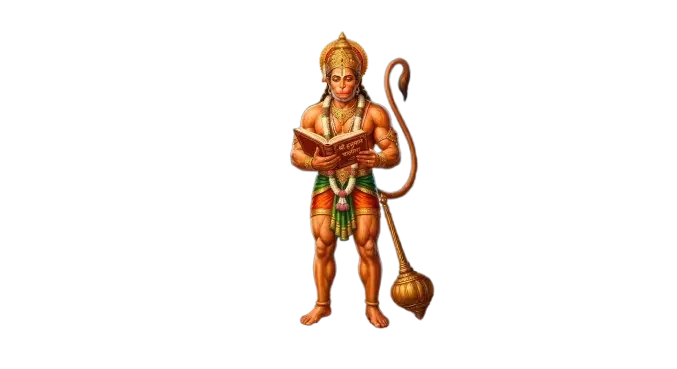
Hanuman Chalisa Lyrics: Full Words in Hindi & English
श्री हनुमान चालीसा लिखित में
Hanuman Chalisa at a Glance
| Written by | Goswami Tulsidas (16th century) |
|---|---|
| Language | Awadhi (a dialect of Hindi), Devanagari script |
| Total verses | 43: 2 dohas + 40 chaupais + 1 doha |
| Dedicated to | Lord Hanuman (Bajrangbali, Pavanputra, Anjaneya) |
| Time to recite | About 7–10 minutes (fast version: 3–5 minutes) |
| Special days | Tuesday and Saturday; Hanuman Jayanti |
| Also read in | Telugu, Kannada, Marathi, Bengali, Gujarati, Tamil, Odia and English |
Want it in your own script? Read the Hanuman Chalisa in:
Full Hanuman Chalisa Lyrics with Meaning
Each verse shows the original Hindi words, the same words in English letters (so you can pronounce them correctly) and a simple English meaning. Use the switches to hide what you don’t need.
श्रीगुरु चरन सरोज रज, निज मनु मुकुरु सुधारि।
बरनउँ रघुबर बिमल जसु, जो दायकु फल चारि॥
Shri Guru charan saroj raj, nij manu mukuru sudhari.
Baranau Raghubar bimal jasu, jo dayaku phal chari.
Meaning: I clean the mirror of my mind with the dust of my Guru’s lotus feet, and then describe the pure glory of Shri Ram (Raghubar), which grants the four fruits of life: dharma, artha, kama and moksha.
बुद्धिहीन तनु जानिके, सुमिरौं पवन-कुमार।
बल बुधि बिद्या देहु मोहिं, हरहु कलेस बिकार॥
Buddhiheen tanu janike, sumirau Pavan-Kumar.
Bal buddhi bidya dehu mohi, harahu kales bikar.
Meaning: Knowing myself to be lacking in wisdom, I remember you, son of the Wind God. Give me strength, intelligence and knowledge, and remove my troubles and faults.
जय हनुमान ज्ञान गुन सागर। जय कपीस तिहुँ लोक उजागर॥
Jai Hanuman gyan gun sagar, Jai Kapees tihu lok ujagar.
Meaning: Victory to Hanuman, the ocean of wisdom and virtue. Victory to the lord of the monkeys, who lights up all three worlds.
राम दूत अतुलित बल धामा। अंजनि-पुत्र पवनसुत नामा॥
Ram doot atulit bal dhama, Anjani-putra Pavansut nama.
Meaning: You are Ram’s messenger and the home of matchless strength, known as Anjani’s son and the son of the Wind.
महाबीर बिक्रम बजरंगी। कुमति निवार सुमति के संगी॥
Mahabir bikram Bajrangi, Kumati nivar sumati ke sangi.
Meaning: Great hero, mighty one with a body strong as a thunderbolt, you remove bad thinking and stay with those who think well.
कंचन बरन बिराज सुबेसा। कानन कुंडल कुंचित केसा॥
Kanchan baran biraj subesa, Kanan kundal kunchit kesa.
Meaning: Your body shines like gold and you are finely dressed, with earrings in your ears and curly hair.
हाथ बज्र औ ध्वजा बिराजै। काँधे मूँज जनेऊ साजै॥
Hath bajra au dhvaja birajai, Kandhe moonj janeu sajai.
Meaning: A thunderbolt (mace) and a flag shine in your hands, and a sacred thread of munja grass adorns your shoulder.
संकर सुवन केसरीनंदन। तेज प्रताप महा जग बंदन॥
Shankar suvan Kesari-nandan, Tej pratap maha jag bandan.
Meaning: You are a form of Shiva and the son of Kesari. Your radiance and glory are honored by the whole world.
बिद्यावान गुनी अति चातुर। राम काज करिबे को आतुर॥
Bidyavan guni ati chatur, Ram kaj karibe ko atur.
Meaning: You are learned, virtuous and very wise, always eager to do Ram’s work.
प्रभु चरित्र सुनिबे को रसिया। राम लखन सीता मन बसिया॥
Prabhu charitra sunibe ko rasiya, Ram Lakhan Sita man basiya.
Meaning: You delight in hearing the Lord’s stories. Ram, Lakshman and Sita live in your heart.
सूक्ष्म रूप धरि सियहिं दिखावा। बिकट रूप धरि लंक जरावा॥
Sukshma roop dhari Siyahi dikhava, Bikat roop dhari Lank jarava.
Meaning: Taking a tiny form you appeared before Sita, and taking a fearsome form you burned Lanka.
भीम रूप धरि असुर सँहारे। रामचंद्र के काज सँवारे॥
Bheem roop dhari asur sanhare, Ramchandra ke kaj sanvare.
Meaning: Taking a giant form you destroyed the demons and completed Ramchandra’s tasks.
लाय सजीवन लखन जियाये। श्रीरघुबीर हरषि उर लाये॥
Laye Sajivan Lakhan jiyaye, Shri Raghubir harashi ur laye.
Meaning: You brought the Sanjeevani herb and revived Lakshman. Shri Ram, overjoyed, hugged you to his heart.
रघुपति कीन्ही बहुत बड़ाई। तुम मम प्रिय भरतहि सम भाई॥
Raghupati keenhi bahut badai, Tum mam priya Bharatahi sam bhai.
Meaning: Ram praised you greatly and said, “You are as dear to me as my brother Bharat.”
सहस बदन तुम्हरो जस गावैं। अस कहि श्रीपति कंठ लगावैं॥
Sahas badan tumharo jas gavain, As kahi Shripati kanth lagavain.
Meaning: “May a thousand mouths sing your glory,” said the Lord, and embraced you.
सनकादिक ब्रह्मादि मुनीसा। नारद सारद सहित अहीसा॥
Sanakadik Brahmadi munisa, Narad Sarad sahit Ahisa.
Meaning: Sanaka and the sages, Brahma and the great saints, Narad, Saraswati and Sheshnag (all sing your praise).
जम कुबेर दिगपाल जहाँ ते। कबि कोबिद कहि सके कहाँ ते॥
Jam Kuber Digpal jahan te, Kabi kobid kahi sake kahan te.
Meaning: Yama, Kubera and the guardians of the directions, and even poets and scholars, cannot fully describe your glory.
तुम उपकार सुग्रीवहिं कीन्हा। राम मिलाय राज पद दीन्हा॥
Tum upkar Sugrivahi keenha, Ram milaye raj pad deenha.
Meaning: You helped Sugriva by bringing him to Ram, who gave him back his kingdom.
तुम्हरो मंत्र बिभीषन माना। लंकेस्वर भए सब जग जाना॥
Tumharo mantra Bibhishan mana, Lankeshwar bhaye sab jag jana.
Meaning: Vibhishan followed your advice and became king of Lanka, as the whole world knows.
जुग सहस्र जोजन पर भानू। लील्यो ताहि मधुर फल जानू॥
Jug sahastra jojan par Bhanu, Leelyo tahi madhur phal janu.
Meaning: The sun, thousands of yojanas away, you swallowed thinking it was a sweet fruit.
प्रभु मुद्रिका मेलि मुख माहीं। जलधि लाँघि गये अचरज नाहीं॥
Prabhu mudrika meli mukh mahi, Jaladhi langhi gaye achraj nahi.
Meaning: Holding the Lord’s ring in your mouth you leapt across the ocean, and no wonder in that.
दुर्गम काज जगत के जेते। सुगम अनुग्रह तुम्हरे तेते॥
Durgam kaj jagat ke jete, Sugam anugrah tumhre tete.
Meaning: Every difficult task in the world becomes easy by your grace.
राम दुआरे तुम रखवारे। होत न आज्ञा बिनु पैसारे॥
Ram duare tum rakhvare, Hot na agya binu paisare.
Meaning: You guard Ram’s door. No one enters without your permission.
सब सुख लहै तुम्हारी सरना। तुम रच्छक काहू को डर ना॥
Sab sukh lahai tumhari sarna, Tum rakshak kahu ko dar na.
Meaning: Those who take refuge in you find every happiness. With you as protector, there is nothing to fear.
आपन तेज सम्हारो आपै। तीनों लोक हाँक तें काँपै॥
Aapan tej samharo aapai, Teenon lok hank te kanpai.
Meaning: Only you can hold your own power. All three worlds tremble at your roar.
भूत पिसाच निकट नहिं आवै। महाबीर जब नाम सुनावै॥
Bhoot pisach nikat nahi aavai, Mahabir jab naam sunavai.
Meaning: Ghosts and evil spirits do not come near when your name, Mahavir, is spoken.
नासै रोग हरै सब पीरा। जपत निरंतर हनुमत बीरा॥
Nasai rog harai sab peera, Japat nirantar Hanumat beera.
Meaning: Disease is destroyed and all pain removed by constantly chanting the name of brave Hanuman.
संकट तें हनुमान छुड़ावै। मन क्रम बचन ध्यान जो लावै॥
Sankat te Hanuman chhudavai, Man kram bachan dhyan jo lavai.
Meaning: Hanuman frees from trouble those who remember him in thought, deed and word.
सब पर राम तपस्वी राजा। तिन के काज सकल तुम साजा॥
Sab par Ram tapasvi raja, Tin ke kaj sakal tum saja.
Meaning: Ram, the ascetic king, is above all, and you carried out all his work.
और मनोरथ जो कोई लावै। सोइ अमित जीवन फल पावै॥
Aur manorath jo koi lavai, Soi amit jeevan phal pavai.
Meaning: Whoever comes to you with any wish receives the endless fruit of life.
चारों जुग परताप तुम्हारा। है परसिद्ध जगत उजियारा॥
Charon jug partap tumhara, Hai parsiddh jagat ujiyara.
Meaning: Your glory shines through all four ages and lights up the world.
साधु संत के तुम रखवारे। असुर निकंदन राम दुलारे॥
Sadhu sant ke tum rakhvare, Asur nikandan Ram dulare.
Meaning: You protect saints and sages, destroy demons, and are dear to Ram.
अष्ट सिद्धि नौ निधि के दाता। अस बर दीन जानकी माता॥
Ashta siddhi nau nidhi ke data, As bar deen Janaki mata.
Meaning: Mother Sita (Janaki) blessed you so that you can grant the eight siddhis (powers) and nine nidhis (treasures).
राम रसायन तुम्हरे पासा। सदा रहो रघुपति के दासा॥
Ram rasayan tumhare pasa, Sada raho Raghupati ke dasa.
Meaning: You hold the nectar of devotion to Ram, and you always remain his servant.
तुम्हरे भजन राम को पावै। जनम जनम के दुख बिसरावै॥
Tumhare bhajan Ram ko pavai, Janam janam ke dukh bisravai.
Meaning: Through devotion to you, one reaches Ram and forgets the sorrows of many lifetimes.
अंत काल रघुबर पुर जाई। जहाँ जन्म हरि-भक्त कहाई॥
Ant kal Raghubar pur jai, Jahan janam Hari-bhakt kahai.
Meaning: At the end of life one goes to Ram’s abode, and wherever one is born, is known as a devotee of Hari.
और देवता चित्त न धरई। हनुमत सेइ सर्ब सुख करई॥
Aur devta chitt na dharai, Hanumat sei sarb sukh karai.
Meaning: Even without holding any other deity in mind, serving Hanuman brings every happiness.
संकट कटै मिटै सब पीरा। जो सुमिरै हनुमत बलबीरा॥
Sankat katai mitai sab peera, Jo sumirai Hanumat balbeera.
Meaning: Troubles are cut away and all pain ends for whoever remembers mighty, brave Hanuman.
जै जै जै हनुमान गोसाईं। कृपा करहु गुरुदेव की नाईं॥
Jai jai jai Hanuman Gosain, Kripa karahu gurudev ki nain.
Meaning: Victory, victory, victory to Lord Hanuman! Bless me as a guru blesses a disciple.
जो सत बार पाठ कर कोई। छूटहि बंदि महा सुख होई॥
Jo sat bar path kar koi, Chhutahi bandi maha sukh hoi.
Meaning: Whoever recites this a hundred times is freed from bondage and gains great happiness.
जो यह पढ़ै हनुमान चालीसा। होय सिद्धि साखी गौरीसा॥
Jo yah padhai Hanuman Chalisa, Hoy siddhi sakhi Gaurisa.
Meaning: Whoever reads this Hanuman Chalisa gains success. Lord Shiva (Gaurisa) is the witness.
तुलसीदास सदा हरि चेरा। कीजै नाथ हृदय महँ डेरा॥
Tulsidas sada Hari chera, Keejai nath hriday mah dera.
Meaning: Tulsidas is forever a servant of Hari. O Lord, make your home in my heart.
पवनतनय संकट हरन, मंगल मूरति रूप।
राम लखन सीता सहित, हृदय बसहु सुर भूप॥
Pavantanay sankat haran, mangal murati roop.
Ram Lakhan Sita sahit, hriday basahu sur bhoop.
Meaning: O son of the Wind, remover of troubles, embodiment of all that is auspicious: king of the gods, live in my heart together with Ram, Lakshman and Sita.
॥ सियावर रामचंद्र की जय · पवनसुत हनुमान की जय ॥
Hanuman Chalisa Lyrics in Hindi (Text Only)
For daily path, here are the complete words in Hindi without meanings: easy to read on your phone or print in big letters.
Show / hide Hindi lyrics
श्रीगुरु चरन सरोज रज, निज मनु मुकुरु सुधारि।
बरनउँ रघुबर बिमल जसु, जो दायकु फल चारि॥
बुद्धिहीन तनु जानिके, सुमिरौं पवन-कुमार।
बल बुधि बिद्या देहु मोहिं, हरहु कलेस बिकार॥
॥ चौपाई ॥
जय हनुमान ज्ञान गुन सागर। जय कपीस तिहुँ लोक उजागर॥
राम दूत अतुलित बल धामा। अंजनि-पुत्र पवनसुत नामा॥
महाबीर बिक्रम बजरंगी। कुमति निवार सुमति के संगी॥
कंचन बरन बिराज सुबेसा। कानन कुंडल कुंचित केसा॥
हाथ बज्र औ ध्वजा बिराजै। काँधे मूँज जनेऊ साजै॥
संकर सुवन केसरीनंदन। तेज प्रताप महा जग बंदन॥
बिद्यावान गुनी अति चातुर। राम काज करिबे को आतुर॥
प्रभु चरित्र सुनिबे को रसिया। राम लखन सीता मन बसिया॥
सूक्ष्म रूप धरि सियहिं दिखावा। बिकट रूप धरि लंक जरावा॥
भीम रूप धरि असुर सँहारे। रामचंद्र के काज सँवारे॥
लाय सजीवन लखन जियाये। श्रीरघुबीर हरषि उर लाये॥
रघुपति कीन्ही बहुत बड़ाई। तुम मम प्रिय भरतहि सम भाई॥
सहस बदन तुम्हरो जस गावैं। अस कहि श्रीपति कंठ लगावैं॥
सनकादिक ब्रह्मादि मुनीसा। नारद सारद सहित अहीसा॥
जम कुबेर दिगपाल जहाँ ते। कबि कोबिद कहि सके कहाँ ते॥
तुम उपकार सुग्रीवहिं कीन्हा। राम मिलाय राज पद दीन्हा॥
तुम्हरो मंत्र बिभीषन माना। लंकेस्वर भए सब जग जाना॥
जुग सहस्र जोजन पर भानू। लील्यो ताहि मधुर फल जानू॥
प्रभु मुद्रिका मेलि मुख माहीं। जलधि लाँघि गये अचरज नाहीं॥
दुर्गम काज जगत के जेते। सुगम अनुग्रह तुम्हरे तेते॥
राम दुआरे तुम रखवारे। होत न आज्ञा बिनु पैसारे॥
सब सुख लहै तुम्हारी सरना। तुम रच्छक काहू को डर ना॥
आपन तेज सम्हारो आपै। तीनों लोक हाँक तें काँपै॥
भूत पिसाच निकट नहिं आवै। महाबीर जब नाम सुनावै॥
नासै रोग हरै सब पीरा। जपत निरंतर हनुमत बीरा॥
संकट तें हनुमान छुड़ावै। मन क्रम बचन ध्यान जो लावै॥
सब पर राम तपस्वी राजा। तिन के काज सकल तुम साजा॥
और मनोरथ जो कोई लावै। सोइ अमित जीवन फल पावै॥
चारों जुग परताप तुम्हारा। है परसिद्ध जगत उजियारा॥
साधु संत के तुम रखवारे। असुर निकंदन राम दुलारे॥
अष्ट सिद्धि नौ निधि के दाता। अस बर दीन जानकी माता॥
राम रसायन तुम्हरे पासा। सदा रहो रघुपति के दासा॥
तुम्हरे भजन राम को पावै। जनम जनम के दुख बिसरावै॥
अंत काल रघुबर पुर जाई। जहाँ जन्म हरि-भक्त कहाई॥
और देवता चित्त न धरई। हनुमत सेइ सर्ब सुख करई॥
संकट कटै मिटै सब पीरा। जो सुमिरै हनुमत बलबीरा॥
जै जै जै हनुमान गोसाईं। कृपा करहु गुरुदेव की नाईं॥
जो सत बार पाठ कर कोई। छूटहि बंदि महा सुख होई॥
जो यह पढ़ै हनुमान चालीसा। होय सिद्धि साखी गौरीसा॥
तुलसीदास सदा हरि चेरा। कीजै नाथ हृदय महँ डेरा॥
॥ दोहा ॥
पवनतनय संकट हरन, मंगल मूरति रूप।
राम लखन सीता सहित, हृदय बसहु सुर भूप॥
Hanuman Chalisa Lyrics in English Letters
If you can’t read Hindi script, read the original words written in English (roman) letters. For a word-by-word English translation, see Hanuman Chalisa meaning in English.
Show / hide English-letter lyrics
Shri Guru charan saroj raj, nij manu mukuru sudhari.
Baranau Raghubar bimal jasu, jo dayaku phal chari.
Buddhiheen tanu janike, sumirau Pavan-Kumar.
Bal buddhi bidya dehu mohi, harahu kales bikar.
|| Chaupai ||
Jai Hanuman gyan gun sagar, Jai Kapees tihu lok ujagar.
Ram doot atulit bal dhama, Anjani-putra Pavansut nama.
Mahabir bikram Bajrangi, Kumati nivar sumati ke sangi.
Kanchan baran biraj subesa, Kanan kundal kunchit kesa.
Hath bajra au dhvaja birajai, Kandhe moonj janeu sajai.
Shankar suvan Kesari-nandan, Tej pratap maha jag bandan.
Bidyavan guni ati chatur, Ram kaj karibe ko atur.
Prabhu charitra sunibe ko rasiya, Ram Lakhan Sita man basiya.
Sukshma roop dhari Siyahi dikhava, Bikat roop dhari Lank jarava.
Bheem roop dhari asur sanhare, Ramchandra ke kaj sanvare.
Laye Sajivan Lakhan jiyaye, Shri Raghubir harashi ur laye.
Raghupati keenhi bahut badai, Tum mam priya Bharatahi sam bhai.
Sahas badan tumharo jas gavain, As kahi Shripati kanth lagavain.
Sanakadik Brahmadi munisa, Narad Sarad sahit Ahisa.
Jam Kuber Digpal jahan te, Kabi kobid kahi sake kahan te.
Tum upkar Sugrivahi keenha, Ram milaye raj pad deenha.
Tumharo mantra Bibhishan mana, Lankeshwar bhaye sab jag jana.
Jug sahastra jojan par Bhanu, Leelyo tahi madhur phal janu.
Prabhu mudrika meli mukh mahi, Jaladhi langhi gaye achraj nahi.
Durgam kaj jagat ke jete, Sugam anugrah tumhre tete.
Ram duare tum rakhvare, Hot na agya binu paisare.
Sab sukh lahai tumhari sarna, Tum rakshak kahu ko dar na.
Aapan tej samharo aapai, Teenon lok hank te kanpai.
Bhoot pisach nikat nahi aavai, Mahabir jab naam sunavai.
Nasai rog harai sab peera, Japat nirantar Hanumat beera.
Sankat te Hanuman chhudavai, Man kram bachan dhyan jo lavai.
Sab par Ram tapasvi raja, Tin ke kaj sakal tum saja.
Aur manorath jo koi lavai, Soi amit jeevan phal pavai.
Charon jug partap tumhara, Hai parsiddh jagat ujiyara.
Sadhu sant ke tum rakhvare, Asur nikandan Ram dulare.
Ashta siddhi nau nidhi ke data, As bar deen Janaki mata.
Ram rasayan tumhare pasa, Sada raho Raghupati ke dasa.
Tumhare bhajan Ram ko pavai, Janam janam ke dukh bisravai.
Ant kal Raghubar pur jai, Jahan janam Hari-bhakt kahai.
Aur devta chitt na dharai, Hanumat sei sarb sukh karai.
Sankat katai mitai sab peera, Jo sumirai Hanumat balbeera.
Jai jai jai Hanuman Gosain, Kripa karahu gurudev ki nain.
Jo sat bar path kar koi, Chhutahi bandi maha sukh hoi.
Jo yah padhai Hanuman Chalisa, Hoy siddhi sakhi Gaurisa.
Tulsidas sada Hari chera, Keejai nath hriday mah dera.
|| Doha ||
Pavantanay sankat haran, mangal murati roop.
Ram Lakhan Sita sahit, hriday basahu sur bhoop.
Structure of the Hanuman Chalisa
A doha is a two-line couplet and a chaupai is a four-part verse in the same rhythm Tulsidas used in the Ramcharitmanas. The 40 chaupais are what give the “Chalisa” (from chalis, forty) its name. Learn more in our full Hanuman Chalisa meaning guide.
What the chaupais describe
| Chaupai 1–10 | Hanuman’s form, strength, wisdom and devotion; finding Sita and burning Lanka |
|---|---|
| Chaupai 11–20 | Bringing Sanjeevani for Lakshman, Ram’s praise, helping Sugriva and Vibhishan, leaping the ocean |
| Chaupai 21–30 | Hanuman as protector: guarding Ram’s door, removing fear, disease and trouble |
| Chaupai 31–40 | The blessings of devotion: siddhis and nidhis, reaching Ram, and Tulsidas’s own prayer |
Who Wrote the Hanuman Chalisa?
The Hanuman Chalisa is traditionally credited to Goswami Tulsidas (c. 1532–1623), the poet-saint of Varanasi who wrote the Ramcharitmanas. Tulsidas signs his name in the last chaupai: “Tulsidas sada Hari chera”. A popular legend says he composed it while imprisoned by the Mughal emperor Akbar, though historians treat this as tradition rather than recorded fact. More details: who wrote the Hanuman Chalisa.
How to Read the Hanuman Chalisa (Simple Vidhi)
- Clean up and sit calmly. After bathing, sit on a mat in a clean, quiet place, facing a picture of Hanuman or Ram Darbar.
- Light a lamp (optional). A ghee or oil diya and incense are traditional. Some offer red flowers or sindoor.
- Remember Ram first. Hanuman is Ram’s devotee, so many people begin with “Shri Ram, Jai Ram, Jai Jai Ram”.
- Recite in order. Start with the two dohas, read all 40 chaupais, and finish with the closing doha.
- Focus on the meaning. Knowing what each line says makes the path more meaningful than speed.
- Finish with aarti. Many devotees end with the Hanuman aarti or the Bajrang Baan.
Best time and day
Morning (after bathing) or evening around sunset are the most common times. Tuesday and Saturday are traditionally dedicated to Hanuman, but the Chalisa can be read any day.
How many times to read it
💡 Tip: If you’re short on time, listen along to the Hanuman Chalisa audio or a fast version, or watch the lyrics video, while reading the words above.
Benefits of Reading the Hanuman Chalisa
These are the benefits devotees traditionally believe in, many of them stated in the Chalisa itself:
| Freedom from fear | “Bhoot pisach nikat nahi aavai” (Chaupai 24): fear and negative forces stay away. |
|---|---|
| Relief from trouble | “Sankat te Hanuman chhudavai” (Chaupai 26): Hanuman is called Sankat Mochan, remover of difficulties. |
| Strength and wisdom | The opening doha asks for “bal buddhi bidya”: strength, intelligence and knowledge. |
| Peace of mind | Many people use it as a calming daily prayer and focus practice. |
| Devotion to Ram | “Tumhare bhajan Ram ko pavai” (Chaupai 33): devotion to Hanuman leads to Ram. |
Read more in Hanuman Chalisa benefits. These are matters of faith, not medical or guaranteed outcomes.
Download, Print or Listen
Looking for a particular singer? See the Gulshan Kumar and Hariharan versions.
Frequently Asked Questions
How many words and verses are in the Hanuman Chalisa?
The Hanuman Chalisa has 43 verses: 2 opening dohas, 40 chaupais and 1 closing doha. “Chalisa” comes from “chalis”, meaning forty, after its 40 chaupais.
Who wrote the Hanuman Chalisa?
It is traditionally credited to Goswami Tulsidas, the 16th-century poet-saint who also wrote the Ramcharitmanas. His name appears in the 40th chaupai.
What language is the Hanuman Chalisa written in?
It is written in Awadhi, an old dialect of Hindi, in the Devanagari script. That is why some words (like “tihu”, “karibe” or “sunibe”) look different from modern Hindi.
What is the correct way to read the Hanuman Chalisa?
Sit in a clean, quiet place, ideally facing a picture of Hanuman or Ram, light a lamp if you wish, start with the two opening dohas and recite all 40 chaupais and the closing doha in order with focus. Pronunciation matters less than devotion and attention.
When is the best time to read the Hanuman Chalisa?
Many people read it in the morning after bathing or in the evening around sunset. Tuesday and Saturday are traditionally considered special days for Hanuman, but it can be read on any day.
How many times should I read the Hanuman Chalisa?
Once a day is common. Many devotees read it 7, 11, 21 or 108 times for a special vow (sankalp). The Chalisa itself mentions 100 recitations in chaupai 38 (“jo sat bar path kar koi”).
How long does it take to recite the Hanuman Chalisa?
At a normal pace it takes about 7 to 10 minutes. Fast versions are around 3 to 5 minutes.
Can I read the Hanuman Chalisa in English letters?
Yes. The roman (English) transliteration on this page lets you read the original words correctly even if you can’t read Hindi script. Read the meaning too, so you know what you are saying.
Make the Hanuman Chalisa Part of Your Day
Save this page, download the PDF, or read it in your own language.
Download PDF English Lyrics TeluguThe Hanuman Chalisa by Goswami Tulsidas is a public-domain devotional text. Spellings of some words differ slightly between editions; this page follows the commonly used version. Meanings are simplified for easy understanding.